Lee Lorenzen on Scientific Resistance: 5 Myths That Hold Innovation Back
Just another WordPress site
Press Release Disclaimer: This is a press release distributed through the XPR Media network. It has not been independently verified by our newsroom.
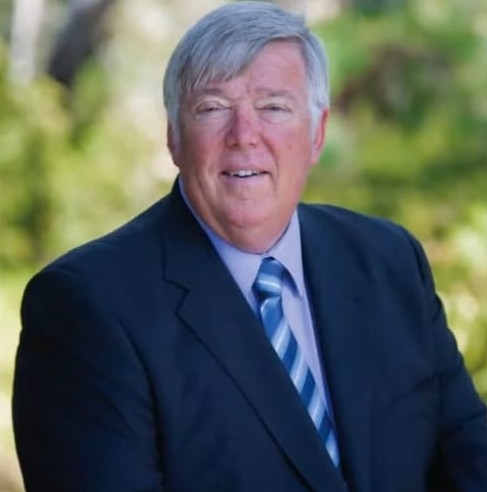

RANCHO SANTA MARGARITA, CA – October 2, 2026 – New ideas rarely enter the world smoothly. In science, people often question, dismiss, or ignore them before they understand them.
According to researcher and inventor Lee Lorenzen, this pattern is not new. It has happened repeatedly throughout history—and it continues today.
Lorenzen, founder of Cluster Solutions, has spent decades studying water structure and hydration science. Along the way, he has seen how unfamiliar ideas can face resistance, even when research supports them.
“History shows us something important,” Lorenzen says. “Being early and being wrong often look the same at first.”
Below are five common myths Lorenzen believes shape how people misunderstand new scientific ideas.
Myth #1: Experts Are Always Right
Why people believe it: People rely on established experts and institutions to guide scientific understanding. Credentials and reputation carry weight.
The reality: History shows that even leading scientists can make incorrect predictions. In 1895, physicist Lord Kelvin stated that heavier-than-air flight was impossible. Just eight years later, the Wright brothers proved otherwise.
“Expert opinion is valuable,” Lorenzen says. “But it is not the final word.”
Practical tip: Treat expert views as informed perspectives—not absolute conclusions. Stay open to new evidence, especially when it challenges current thinking.
Myth #2: If an Idea Is Rejected, It Must Be Wrong
Why people believe it: People often assume that rejection by the scientific community means a concept has been disproven.
The reality: Some ideas are rejected simply because they do not fit existing models. Austrian geologist Otto Ampferer faced strong criticism for his early work on continental drift. People dismissed his ideas for years, but they later became foundational to modern geology.
“New ideas don’t always fail because they’re incorrect,” Lorenzen explains. “Sometimes they fail because they arrive too early.”
Practical tip: Look at how ideas evolve over time. Early rejection does not always mean permanent failure.
Myth #3: Science Advances in a Straight Line
Why people believe it: Many people believe scientific progress moves steadily forward, with each discovery building smoothly on the last.
The reality: Scientific progress is often uneven. It includes setbacks, disagreements, and competing interpretations. Research into complex systems—like water behavior at the molecular level—can take decades to develop.
“Discovery is rarely linear,” Lorenzen says. “It’s a process of testing, questioning, and refining.”
Practical tip: Be patient with emerging fields of research. Complex ideas often take time to fully develop and gain acceptance.
Myth #4: Controversial Research Has No Scientific Basis
Why people believe it: When research challenges established models, people often label it controversial or dismiss it outright.
The reality: Ongoing research has supported some controversial ideas. French immunologist Dr. Jacques Benveniste, for example, studied high-dilution effects, sparking debate in the scientific community. Although criticized, other researchers later revisited his work, including Nobel Laureate Luc Montagnier, who explored related concepts.
“Controversy does not mean absence of research,” Lorenzen says. “It often means the research is still being understood.”
Practical tip: When evaluating controversial topics, look for continued research activity rather than relying on initial reactions.
Myth #5: Breakthrough Ideas Are Immediately Accepted
Why people believe it: People often assume that strong ideas will naturally gain recognition once introduced.
The reality: Many breakthroughs face long periods of skepticism before gaining acceptance. Lorenzen notes that this pattern applies across multiple scientific fields, including his own work on water structure.
“When something challenges existing assumptions, it takes time for people to adjust,” he says.
Practical tip: Recognize that acceptance often follows evidence over time. Early skepticism is a common part of the process.
If You Only Remember One Thing
Scientific progress depends on questioning assumptions.
“Good science requires both skepticism and openness,” Lorenzen says. “You need to question ideas, but you also need to be willing to explore them.”
Why This Matters Today
Lorenzen believes that understanding how innovation works can help people better evaluate new ideas in fields like health, technology, and environmental science.
His own work in clustered water research focuses on how water behaves at the molecular level and how that may affect biological systems. While the field continues to evolve, Lorenzen emphasizes the importance of ongoing research and careful evaluation.
“Water is fundamental to life,” he says. “Understanding it better is a long-term process.”
Take Action: Stay Curious
Innovation does not happen in isolation. It depends on people who are willing to ask questions, test ideas, and revisit assumptions.
If you found these insights useful, share this list with others and consider one simple step: Take a closer look at a scientific idea you have dismissed in the past—and revisit it with fresh perspective.
“Many breakthroughs begin with a question people almost ignore,” Lorenzen says.
About Lee Lorenzen
Lee Lorenzen is the founder and CEO of Cluster Solutions, a research and development company focused on water structure and hydration science. With a background in biology and pharmacology, Lorenzen has spent decades studying molecular water behavior and its potential applications. He holds multiple U.S. patents related to clustered water technology and continues to work with researchers and physicians exploring this field. He is based in Rancho Santa Margarita, California.
Media Contact
Company Name: Lee Lorenzen
Contact Person: Media Relations
Email: Send Email
City: Rancho Santa Margarita
State: California
Country: United States
Website: https://www.leelorenzenceo.com/