Ming Ye Brings Cross-Script Calligraphy to a Texas Community
Chinese-English and Manchu-English works explore how traditional writing can connect with American audiences through
Press Release Disclaimer: This is a press release distributed through the XPR Media network. It has not been independently verified by our newsroom.

Chinese-English and Manchu-English works explore how traditional writing can connect with American audiences through visual art.
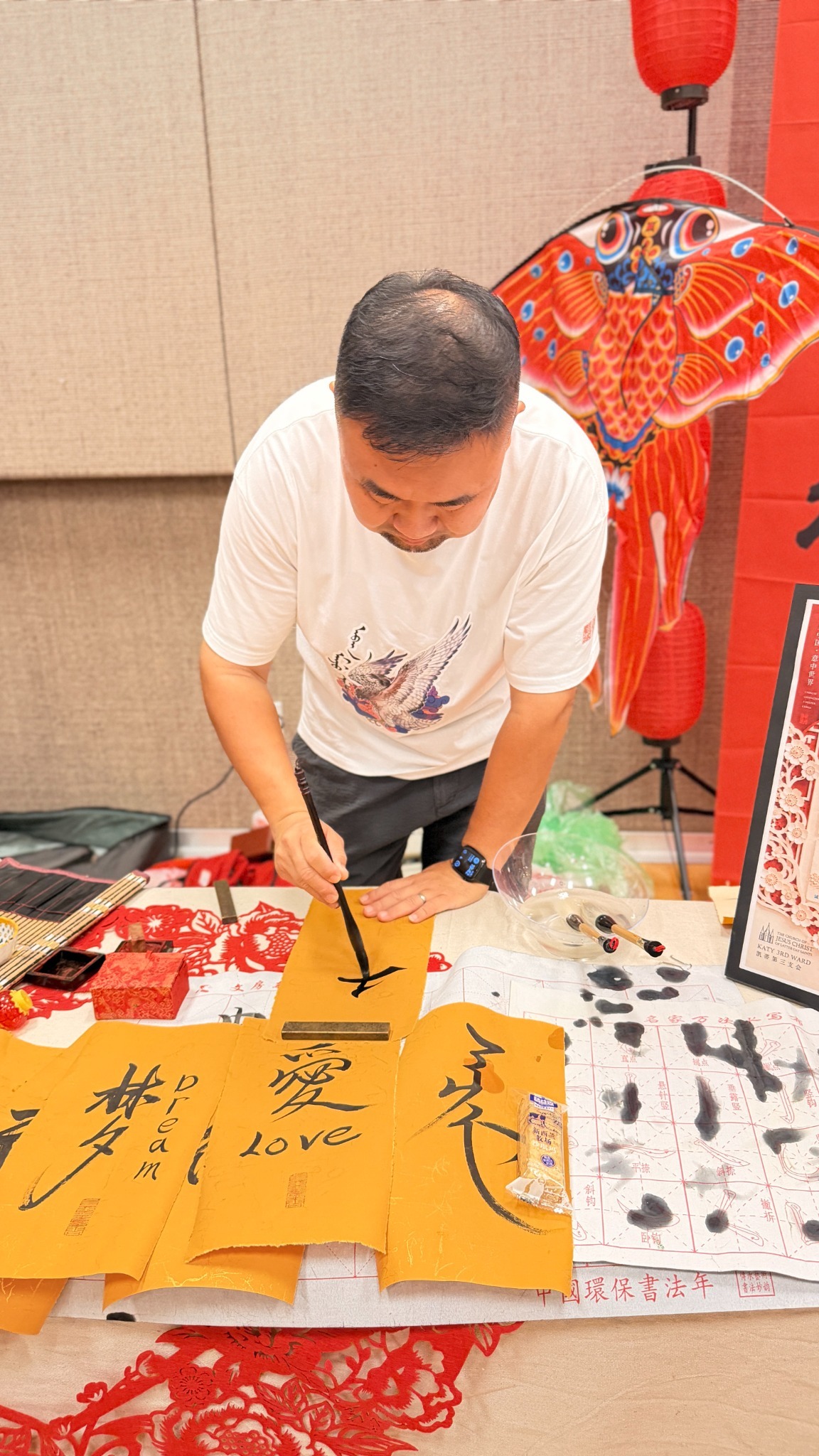
RICHMOND, TX, UNITED STATES, September 30, 2026 /EINPresswire.com/ — Calligrapher and Manchu cultural researcher Ming Ye, also known as Yehenara Yulin, participated in a community Culture Night in Richmond, Texas, on September 22, introducing local residents to traditional Chinese calligraphy and the visual possibilities of different writing systems through live demonstrations, artwork displays, and hands-on brush-writing activities.
The event brought together cultural displays representing different countries and traditions. Ye participated in the China cultural section, where he created new works on site, displayed calligraphy, and invited visitors to try traditional brush writing.
Throughout the evening, children, teenagers, and adults from different cultural backgrounds experimented with brush, ink, line, and character structure. For audiences unfamiliar with Chinese characters or Manchu script, calligraphy can communicate first through visual qualities before its linguistic meaning is understood.
That idea – seeing first, understanding next – has become an increasingly important part of Ye’s artistic and cultural practice in the United States.
During the event, one visitor was drawn to a work featuring the Chinese character ‘梦’ (dream) and asked what it meant. After learning that it means ‘Dream’ in English, she responded enthusiastically and chose the piece to take home. Another visitor asked Ye to create a calligraphic rendering of her Chinese name, turning an unfamiliar writing system into a personalized artwork connected to her own experience.
These encounters reflect a direction Ye has been exploring for English-speaking audiences. Alongside his long-standing work in Manchu and Chinese calligraphy, he has been developing cross-script works in which Chinese characters or Manchu script remain the primary visual elements while familiar English words provide an accessible point of entry.
Someone encountering Manchu script for the first time can experience its distinctive vertical structure and flowing lines before learning the meaning of the work. The purpose is not to replace traditional scripts with English, but to create a bridge between visual experience and linguistic understanding.
“Many people seeing Chinese or Manchu writing for the first time may not know what it means, but that does not prevent them from experiencing it first as visual art,” Ye said. “They may be drawn to the lines, structure, or overall composition. When they then discover that a character represents an idea such as Dream, Love, Home, or Hope, a new connection begins to form between the artwork and the viewer.”
Ye has worked with Manchu language, culture, and traditional writing arts for more than two decades. His practice includes Manchu calligraphy, Chinese calligraphy, Manchu-Chinese combined calligraphy, Manchu seal script, and cross-script visual art.
Now based in the Houston area, Ye continues his artistic, educational, and cultural work through InkBridge Cultural LLC. The Richmond Culture Night represents one example of his growing community cultural practice in the United States.
For Ye, preserving traditional writing is not only about maintaining historical scripts, but also about bringing them into contemporary art, public spaces, education, and everyday cultural interaction. When audiences encounter an unfamiliar script through its visual form, discover its meaning through a familiar English word, and even experience writing it themselves, traditional writing can become a living form of visual art, cultural experience, and human connection.
Building on more than two decades of work with Manchu language, culture, and calligraphic arts, Ye plans to continue expanding this practice in the United States through artistic creation, cultural education, and community engagement, while creating more opportunities for Chinese and American audiences to connect through calligraphy, writing traditions, and visual culture.
By Fiona
MING YE
InkBridge Cultural LLC
yzts.manchu@gmail.com
Legal Disclaimer:
EIN Presswire provides this news content “as is” without warranty of any kind. We do not accept any responsibility or liability
for the accuracy, content, images, videos, licenses, completeness, legality, or reliability of the information contained in this
article. If you have any complaints or copyright issues related to this article, kindly contact the author above.

Media gallery