Sweet Briar College Students Uncover New Archaeological Findings in Albania
Students and graduates gain hands-on excavation experience while documenting ancient structures and uncovering new
Press Release Disclaimer: This is a press release distributed through the XPR Media network. It has not been independently verified by our newsroom.
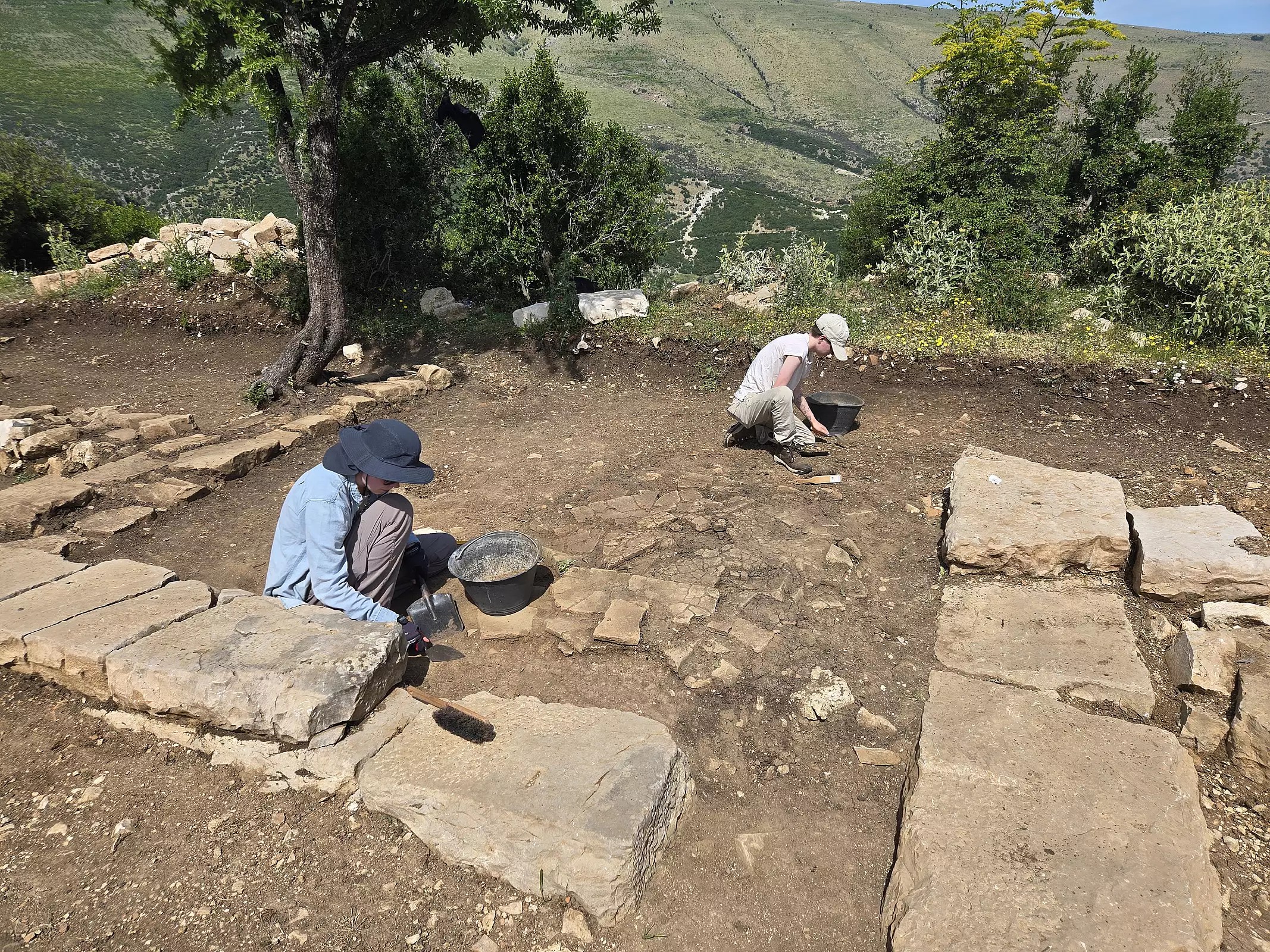

Students and graduates gain hands-on excavation experience while documenting ancient structures and uncovering new evidence of settlement in Albania.
SWEET BRIAR, VA, UNITED STATES, November 3, 2026 /EINPresswire.com/ — For the third summer, the Matohasanaj Archaeological Project brought Sweet Briar College students and recent graduates to Albania to gain field and excavation experience.
Assistant Professor and Program Co-Director Dr. Erin Pitt led Arin Armistead ’25 (who also served as assistant field supervisor), Sarit Goldstein-Mendoza ’26, Amethyst Higginbotham-Mack ’29, and Nathalie Schelin ’26 during this year’s three-week installment of the excavation project. They were joined by Program Co-Director Dr. Sabina Veseli; Project Coordinator, Field Director, and Sweet Briar Adjunct Instructor Mirgen Shametaj; and Field Supervisor Dr. Emily Glass, project officer for Archaeology Wales; with project support by Liri Shametaj. This Sweet Briar team has been excavating the site exclusively.
The project site includes a monumental building from the Hellenistic period (323–31 BCE), as well as several other structures that they determined in previous years to be a fortress. This summer’s work focused on excavating and recording more of the Late Antique and Medieval phases, which are significantly later in occupation at the site than the original settlement and function as a fortress.
According to Dr. Pitt, these two periods of history are not well recorded or known in this area of Albania, except for large settlements in the Vjosa River valley, a number of Byzantine churches, and the establishment of bishoprics (territorial districts or administrative offices governed by Christian bishops).
“Our excavations at the fortress at Matohasanaj have produced important evidence documenting the continuity of settlement at fortified hill sites following the Roman conquest of the area, as well as how settlement patterns and populations fluctuated as a result of the Roman conquest and, ultimately, its collapse,” she said.
The 2025 cohort identified a Late Antique house based on its architectural layout and ceramic evidence recovered from within. They were only able to excavate a very small area of the house, which made it the primary focus of the summer 2026 group.
The four students and graduates carefully excavated the soil and surface material to reveal the preserved collapse of the house’s roof and interior walls in several rooms, all while learning techniques in archaeology.
Following the documentation and removal of these collapses, the cohort also focused on creating a comprehensive record of the roof tiles and building materials from the structure through photography, illustration, and numerical cataloging.
As a result, they were able to establish a robust archive of the kinds, sizes, and characteristics of building materials used in the Late Antique period on the fortress, which will help them reconstruct how the roof was built. It also provides important information to begin establishing a history about craft producers, materials, and building practices for this region.
In addition to the meticulous excavation of the Late Antique house, the group identified several other phases and structures, including the extension of one of the original walls of the Hellenistic monument to the west (which was reused in the building of the Late Antique house and confirms their belief in the existence of additional Hellenistic monuments in this part of the fortress), a medieval building with a furnace or oven, a narrow alleyway between the later structures, and sections of late walls that may represent other structures.
Discover Sweet Briar College
For prospective students interested in combining academic excellence, international experiences, and hands-on research, Sweet Briar College offers a distinctive educational experience on its 2,847-acre campus in Virginia’s Blue Ridge Mountains. Opportunities such as the Matohasanaj Archaeological Project demonstrate how students can work alongside faculty, participate in meaningful research, and gain practical experience beyond the classroom.
Prospective students and families are encouraged to explore Sweet Briar College admissions, schedule a campus visit, and discover the academic programs, scholarships, and opportunities available at the College.
Learn more, schedule a visit, or apply at https://www.sbc.edu/admissions/
Communications and Marketing
Sweet Briar College
+14343816240 ext.
email us here
Visit us on social media:
LinkedIn
Instagram
Facebook
YouTube
TikTok
X
“I” Imagine
Legal Disclaimer:
EIN Presswire provides this news content “as is” without warranty of any kind. We do not accept any responsibility or liability
for the accuracy, content, images, videos, licenses, completeness, legality, or reliability of the information contained in this
article. If you have any complaints or copyright issues related to this article, kindly contact the author above.

Media gallery