Beyond the Repairs: Umar Ali of Owth & Mophet Construction on the Discipline and Human Purpose of Texas Reconstruction
Drawing on Hurricane Harvey rehabilitation experience, Umar Ali highlights rigorous inspections, recovery partnerships,
Press Release Disclaimer: This is a press release distributed through the XPR Media network. It has not been independently verified by our newsroom.
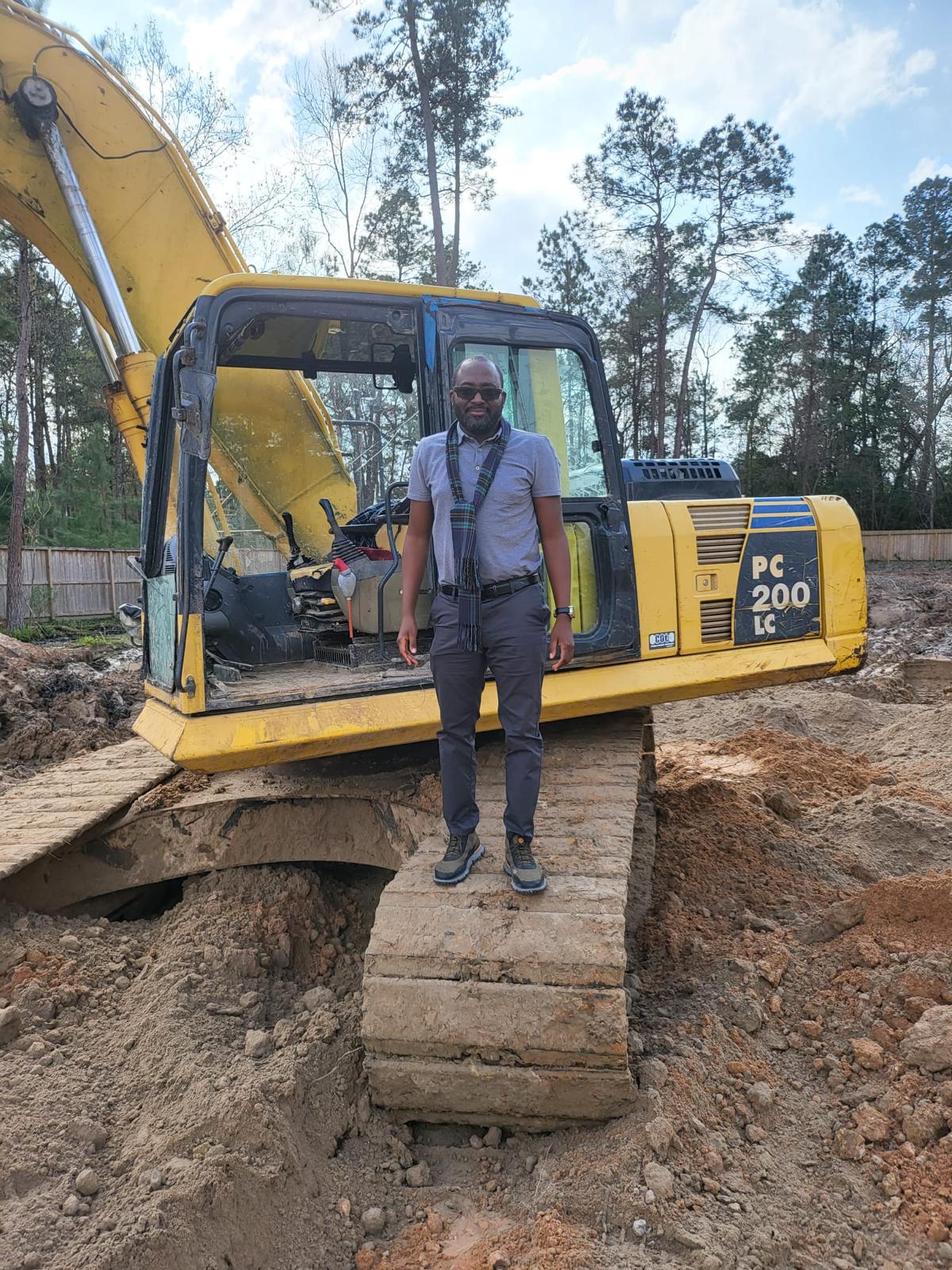

Drawing on Hurricane Harvey rehabilitation experience, Umar Ali highlights rigorous inspections, recovery partnerships, and helping Texas families return home.
HOUSTON, TX, UNITED STATES, October 23, 2026 /EINPresswire.com/ — Rebuilding a home after a natural disaster involves far more than repairing damaged walls, replacing flooring, or installing new electrical systems. Behind every completed property is a coordinated process involving homeowners, general contractors, skilled tradespeople, government recovery administrators, and inspectors working to restore safe and functional housing.
For Umar Ali, Head of Owth & Mophet Construction, residential rehabilitation has provided some of the most valuable lessons of his construction career, particularly through his earlier involvement in rebuilding homes following Hurricane Harvey.
“Throughout my experience in construction, residential rehabilitation has reinforced the importance of precision, patience, accountability, and attention to detail,” said Ali. “You develop a greater appreciation for everything involved in delivering a properly completed home, from understanding detailed scopes of work and coordinating with general contractors to meeting inspection requirements and communicating effectively with homeowners.”
Ali believes these experiences demonstrate how well-organized reconstruction programs can strengthen construction practices while serving an important human purpose.
The Discipline Behind Residential Rehabilitation
Government-supported reconstruction programs typically operate within carefully defined scopes of work, construction specifications, approved budgets, and inspection procedures.
Ali says one of the most valuable aspects of his reconstruction experience has been the discipline required to understand and execute construction scopes line by line.
“Every item in the scope of work has a purpose,” Ali explained. “You need to understand exactly what is required, the materials and quantities specified, and the standards that must be satisfied. You also learn the importance of documenting completed work, coordinating inspections, and following established procedures for approvals and payments.”
That discipline extends to conditions discovered after construction begins.
When previously concealed damage or additional work is identified outside the approved scope, contractors must follow the appropriate reporting and authorization procedures before proceeding.
“If you discover something that needs attention but is not included in the original scope, you communicate it to your general contractor,” Ali said. “The issue is documented, reviewed, and submitted through the proper channels. Once authorization is received, the additional work can proceed. It is a structured process that helps protect the homeowner, the contractor, and the integrity of the project.”
The Texas General Land Office’s published housing construction standards establish written change-order procedures for work outside an original authorization, providing a formal mechanism for reviewing necessary changes.
Why Detailed Inspections Matter
One aspect of government-supported reconstruction that Ali particularly values is the rigor of the inspection process.
The Texas General Land Office’s current disaster housing guidelines provide for progress inspections, final inspections, and inspections conducted under Texas Real Estate Commission (TREC) standards, with specific requirements depending on the type of construction.
Under the GLO’s 2024 disaster housing guidelines, reconstruction projects require a progress inspection at approximately 50% completion, before insulation conceals important building systems.
That inspection assesses construction progress, compliance with applicable building standards, and completion of work scheduled under the approved scope. Inspectors review such elements as roofing and weather protection, rough-in plumbing, electrical installations, and mechanical systems.
The same guidelines require final and TREC inspections for both reconstruction and rehabilitation projects, although rehabilitation projects do not require the separate 50% progress inspection under that program.
Ali believes these intermediate reviews are especially valuable because they allow deficiencies to be identified and corrected before construction advances too far.
“The 50% inspection is one of the most important stages of the process,” Ali said. “It gives everyone an opportunity to review the work carefully while corrections can still be made. In my experience, general contractors and their inspection teams have been very detailed in explaining what needs attention. You can go through the requirements line by line, understand exactly what is expected, and make the necessary corrections before moving forward.”
Ali sees this approach as constructive rather than punitive.
“An inspection is not simply about finding something wrong,” he explained. “It is also an opportunity to understand the standards more thoroughly. You learn why a particular installation matters, how it should be completed, and what inspectors are looking for. That knowledge stays with you.”
The details can extend to electrical protection, appropriate installation of outlets and circuits, insulation, plumbing, ventilation, and the weather sealing of doors and windows.
TREC inspections provide an additional review of property conditions under professional inspection standards. Those standards complement, rather than replace, applicable building codes and local permitting requirements.
Ali believes this combination of oversight and practical experience develops construction knowledge that extends well beyond government-funded rehabilitation.
“When you become accustomed to that level of detail, you carry it into other projects,” Ali said. “Whether you are building for a private homeowner, working with a commercial client, or developing your own property, you have a deeper understanding of construction quality and the standards that should guide your work. That is one of the lasting benefits of the experience.”
Recognizing the Texas General Land Office and General Contractors
Ali also recognizes the Texas General Land Office (GLO) for its sustained role in administering disaster recovery programs and coordinating assistance to affected communities.
Under Texas Land Commissioner Dawn Buckingham, the agency marked the completion of its Hurricane Harvey homeowner housing recovery programs in December 2025.
According to the GLO, its direct efforts rebuilt 8,750 homes. Combined with the Houston and Harris County programs, more than 9,100 homes were rebuilt and more than 4,400 homeowners received repair reimbursements across 49 Texas counties.
The agency continues administering recovery programs addressing subsequent disasters, including Hurricane Beryl and other severe weather events in 2024.
“The Texas General Land Office deserves recognition for the scale, organization, and coordination involved in these programs,” Ali said. “There is an extraordinary amount of work behind each completed home, from determining eligibility and assessing damage to managing construction requirements, inspections, and final acceptance. You develop an appreciation for the entire system when you have experience working within that environment.”
Ali also emphasizes the importance of general contractors responsible for coordinating trades, communicating technical requirements, maintaining schedules, and overseeing construction quality.
Modern estimating technology contributes to that organization.
The GLO’s published housing guidelines identify Xactimate, a widely used property repair estimating platform, as part of the process for preparing estimated repair costs and damage valuations.
Ali says reconstruction scopes received through general contractors have likewise included Xactimate-based estimates, providing detailed descriptions of work, quantities, and pricing.
Owth & Mophet Construction has personnel trained to understand and work with Xactimate estimates, supporting its evaluation of rehabilitation and reconstruction opportunities.
“Having a properly documented scope makes a tremendous difference,” Ali said. “Everyone can see what work has been authorized, what is expected, and how the different components are organized. Combined with proper inspections and change-order procedures, it creates transparency and accountability throughout the construction process.”
Valuable Lessons for the Broader Construction Industry
Ali believes the structured environment of residential rehabilitation offers valuable experience for construction companies seeking to strengthen their operations and expand their professional relationships.
The disciplines involved—accurate estimating, scope management, documentation, quality control, inspections, and subcontractor coordination—are equally relevant to custom residential construction, commercial renovations, and institutional projects.
For construction professionals, working alongside experienced general contractors and operating within established government recovery requirements can provide a deeper understanding of how complex projects are managed.
“Reconstruction teaches you to be disciplined and methodical,” Ali said. “You learn the importance of following specifications, communicating effectively with different professionals, and delivering work that can withstand detailed inspection. Those are principles that apply throughout the construction industry.”
He believes the greatest value of these experiences is not simply learning to satisfy a particular government program, but developing professional habits that promote consistency and quality across construction projects.
The Human Reward of Helping Texans Return Home
Beyond the technical standards, construction schedules, and inspection reports are families whose lives have been disrupted by storms and flooding.
For Ali, the human experience remains the most memorable part of residential reconstruction.
He recalls the satisfaction of seeing homeowners participate in decisions about their rebuilt homes, from selecting paint colors and flooring to watching their living spaces gradually take shape.
“One of the most rewarding aspects of reconstruction is seeing homeowners become involved in the transformation of their properties,” Ali said. “You see them discussing finishes, watching the work progress, and gradually looking forward to returning home. Those moments remind you that construction is ultimately about the people who will live in the buildings we create.”
He believes working with families during difficult circumstances also reinforces the importance of patience, clear communication, professionalism, and respect for individual needs.
“There is something very meaningful about seeing fellow Texans return to their homes after experiencing a disaster,” Ali concluded. “You appreciate the engineering, the coordination, the inspections, and the work performed by everyone involved. But the most satisfying part is knowing that a family can finally return home and begin moving forward. That is what gives reconstruction its human purpose.”
For Ali, the lessons gained through residential rehabilitation continue to reinforce a broader construction philosophy: quality work requires technical competence, disciplined execution, strong professional relationships, and an understanding of the people and communities ultimately served.
⸻
About Owth & Mophet Construction
Owth & Mophet Construction is the public-facing construction identity of Owth & Mophet LLC, a Houston, Texas-based construction and development company focused on luxury residential construction, custom home development, commercial construction, disaster recovery, and reconstruction.
The company also pursues opportunities in storm- and flood-damaged property restoration, insurance-related repairs and rebuilding, government-funded housing rehabilitation and reconstruction, and commercial subcontracting for healthcare, educational, institutional, and public-sector facilities.
Led by Umar Ali, Head of Owth & Mophet Construction, the company emphasizes quality craftsmanship, disciplined construction economics, resilient building practices, innovative development strategies, and long-term property value.
Robert Stacks
Owth & Mophet Construction
Visit us on social media:
X
Legal Disclaimer:
EIN Presswire provides this news content “as is” without warranty of any kind. We do not accept any responsibility or liability
for the accuracy, content, images, videos, licenses, completeness, legality, or reliability of the information contained in this
article. If you have any complaints or copyright issues related to this article, kindly contact the author above.

Media gallery